How To Mix and Match Bedding: Coordinating Colors, Patterns, and Textures
When designing the look for your perfect bedroom, follow our tips to coordinate colorful, solid, and printed bedding layers that feel intentional and inviting. To mix and match bedding, start with a color palette, select two or three patterns with varied scale, and layer solids thoughtfully to pull the look together.
For example, we love combining dreamy blue sheets with a robin’s egg medallion comforter, pairing a bold quilt with a jewel-tone solid throw, or adding a duvet cover featuring crisp geometric patterns layered with contemporary neutral shams. With a little know-how, you can design a cohesive look you love, using colors and textures that make you say “ahhh.” And when each day ends, you’ll relish slipping into your beautiful, welcoming bed.
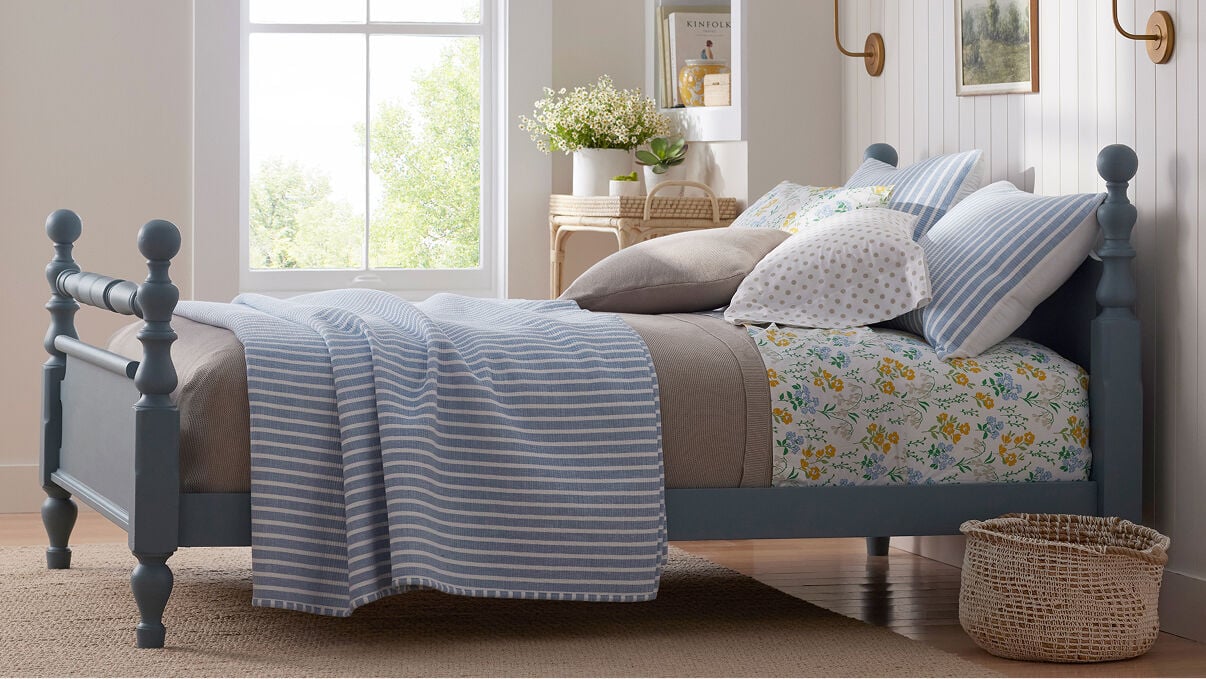
How To Mix and Match Bedding (Without It Looking Messy)
Mixing and matching bedding works best when you follow a few simple guidelines. Rather than layering patterns at random, use one of these three approaches to keep your bed looking intentional and cohesive.
Mix Patterns By Scale: Best for Beginners
Start by combining patterns in different sizes so they don’t compete visually. Pair one large-scale print with a smaller pattern, then ground the look with solid bedding. For example, you can mix patterns like stripes and florals by choosing a bold garden print for your duvet cover and a scaled-back, minimalist squiggle stripe design for your sheets and shams.
- Large-scale: comforter or duvet cover
- Medium-scale: quilt or shams
- Small-scale: sheets or accent pillows
Keeping each pattern at a different scale creates contrast without clutter. It also gives the eye space to rest.
Best For: First-time pattern mixing, low-risk updates, clean and balanced looks
Mix Patterns by Color Family: Best for Cohesive Looks
Choose patterns that share a similar color palette, even if the designs are different. Florals, stripes, and geometrics can work together when they pull from the same tones—think all cool blues, warm earth tones, or soft pastels.
To keep it cohesive:
- Repeat at least one color across each layer
- Stick to 2–3 main colors
- Use neutrals to break up bolder prints
This approach creates a pulled-together look that never feels overly matched.
Best For: Calm, coordinated bedrooms, monochromatic palettes, subtle pattern mixing
Mix Patterns by Style: Best for a Magazine-Inspired Feel
Combine patterns that share a similar design style or mood. For example, traditional florals pair well with classic stripes, while modern geometrics work best with clean lines and minimal textures.
Think in terms of overall aesthetic:
- Classic: florals, ticking stripes, toile
- Modern: geometrics, abstract prints, tonal textures
- Relaxed: botanicals, soft stripes, organic patterns
Layering within the same style keeps the bed looking curated rather than chaotic and helps the finished look feel intentional, not accidental.
Best For: Styled, editorial looks, and design-forward bedrooms